There’s a detail that runs through all of Vincent van Gogh’s correspondence, and the more you learn about it, the more moving it becomes: he wrote like someone holding onto a thread so as not to lose himself. This isn’t an empty metaphor — across more than 900 letters, most addressed to his brother Theo, Van Gogh used writing as the one place where he could stay whole, even as everything around him — his body, his mind, his material life — seemed to be falling apart.
Writing raw
Reading Van Gogh’s letters means entering a flow that doesn’t separate the trivial from the essential. On the same page — sometimes in the same paragraph — he would list the exact price of a tube of paint, complain about a delayed shipment, and then, with no transition at all, plunge into a reflection on loneliness, faith, or the exact color of the sky at dusk. There was almost no filter between what he felt and what he wrote: emotion reached the page nearly in real time, unedited, unpolished.
He himself tried to explain this state. In a letter to Theo, trying to describe how certain canvases came to be, he wrote that when the emotion was strong enough, he would work without realizing he was working — and that, in those moments, the brushstrokes came with the same continuity and coherence as words in a speech. This isn’t a description of technique. It’s the description of someone possessed by his own feeling, where the hand moves before reason can catch up.
That same urgency shows up in the vocabulary he used for color. A color was rarely just “blue” or “yellow” — it was terrible, furious, tender, violent: words borrowed from human experience, as if the landscape outside felt with the same intensity he did. In another letter, he wrote that when he felt an almost religious need for meaning, he would go out and paint the stars — treating his own craft as an act of faith as urgent as prayer.
There was also a painful awareness of this excess. In several letters he stops mid-thought to apologize for burdening Theo once again with his anguish — and then, in the next paragraph, keeps going anyway, because he couldn’t do otherwise. That oscillation between restraint and overflow is, perhaps, what makes reading them feel so alive today: this isn’t the writing of someone performing composure or balance. It’s the writing of someone who felt everything first, with his whole body, and only afterward — if there was any energy left — tried to organize what he’d felt into sentences.
What goes on in the heart of an eccentric man
In July 1882, still early in his path as an artist, Van Gogh wrote to Theo about how others saw him: a man with no place in the world, strange, difficult, perhaps the lowest of the low. And yet it was precisely from that place that his deepest desire was born — to show, through his work, what actually lived inside someone so harshly judged from the outside. This idea holds the core of everything that would follow: painting not as ambition for success, but as proof that there was an inner life worth being seen.
It’s painful to read this knowing what we know now — that in his lifetime he sold exactly one painting, and that the recognition he so desperately sought would only arrive after his death.
The stars, the train, and a question with no answer
In July 1888, by then settled in Arles, during what would be the most productive period of his life — before the crisis with Gauguin, before the self-mutilation, before the hospitalizations — Van Gogh wrote one of the most quoted passages in all his correspondence. Looking up at the night sky, he wondered why the bright points in the firmament couldn’t be as reachable as the black dots marking cities on a map. And he ventured a comparison: just as one takes a train to reach a neighboring town, perhaps death was needed to reach a star.
It’s worth noting the context: this isn’t the letter of a man in acute crisis, begging for help. It’s the reflection of someone raised in the home of a Protestant pastor, trained from an early age in ideas of eternity and transcendence, trying — the way he did with colors when finishing a canvas — to give shape to a question everyone carries: is there something after? Is death an end or a passage?
What makes this letter hard to read today isn’t what it meant then, but what we know came after. Two years later, that same man would take his own life. That doesn’t turn the letter into a premonition or a plan — that would oversimplify a mind that, at the time, was still at the height of its creative powers, painting sunflowers, café terraces at night, portraits full of color and vitality. But it may help explain that, for Van Gogh, the line between living intensely and suffering intensely was never very clearly drawn.
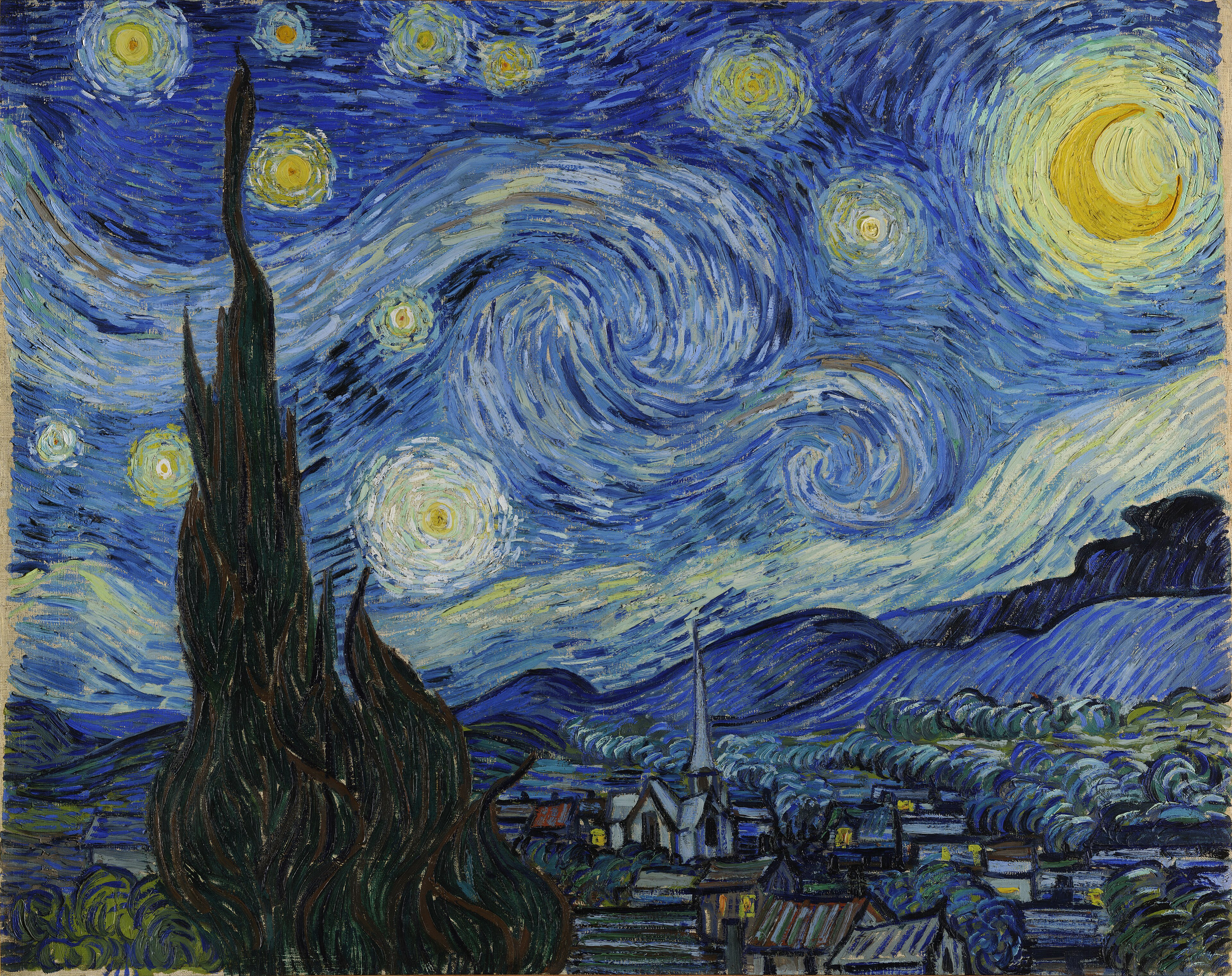
That reflection didn’t stay only on paper. Months later, in September 1888, still in Arles, it took shape in Starry Night Over the Rhône. And it returned, a year later, even more intensely, in the painting that would become the most famous of his entire body of work: The Starry Night, painted in Saint-Rémy-de-Provence, based on the view — part invented, part remembered — from the window of the room where he was hospitalized.
The fall
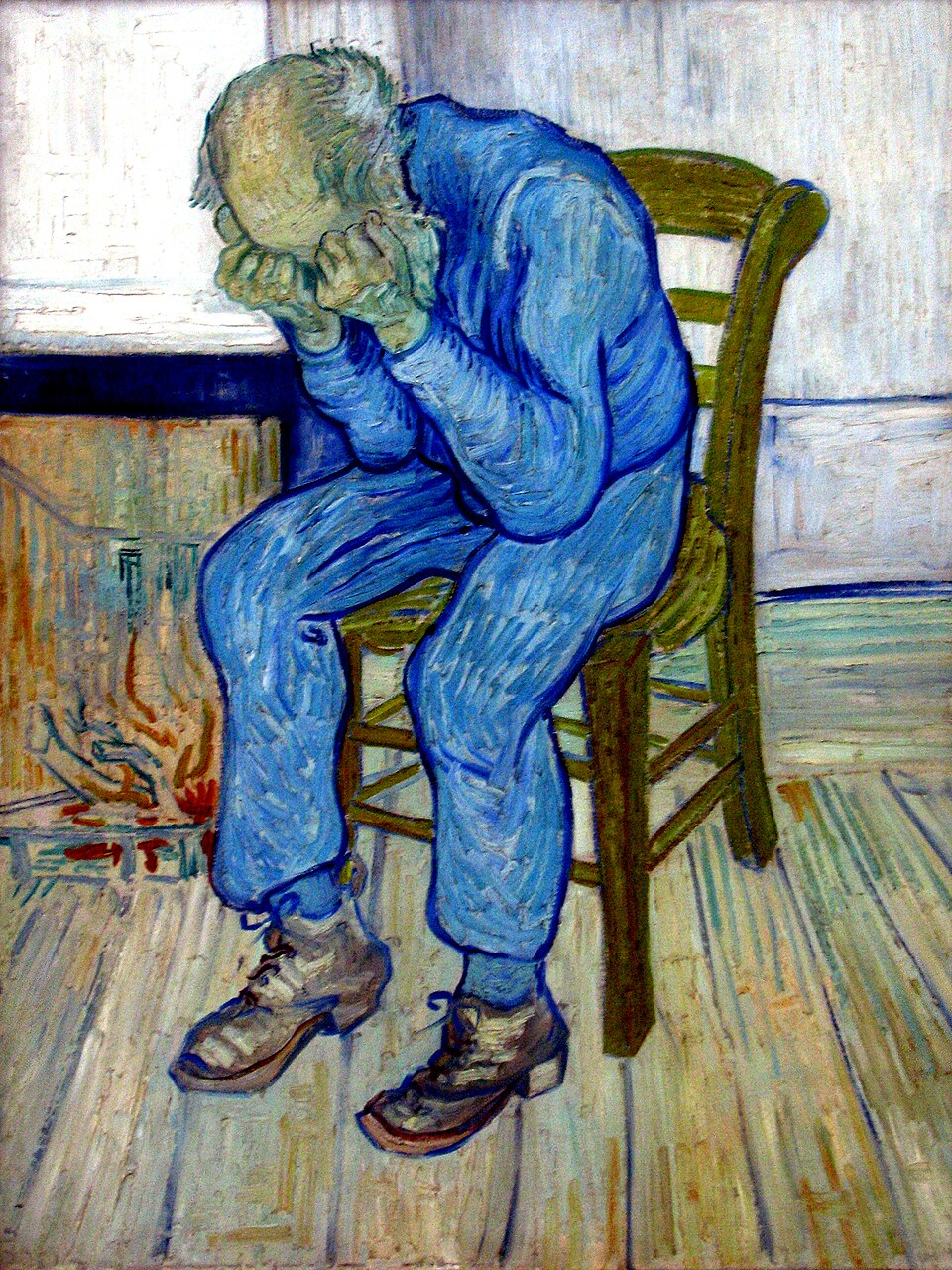
What came next is better known: the tense cohabitation with Gauguin, the episode in which he injured his own ear, the voluntary hospitalizations at Saint-Rémy-de-Provence between 1889 and 1890. Even there, surrounded by crises he himself couldn’t name or fully explain, Van Gogh kept writing — and kept painting. One of his last paintings made at the institution — At Eternity’s Gate, a seated man, hunched over himself, his face hidden in his hands — is an almost pure image of desolation.
When he finally left the hospital in May 1890, he went to live in Auvers-sur-Oise, under the care of Dr. Gachet — a place he hoped, with a caution recorded in letters from this period, might finally be a refuge.
The letter left in his pocket
It wasn’t sent. On July 23, 1890, Van Gogh wrote a letter to Theo that would never be sent. In it, amid reflections on his own work and his place in the world, he left an idea that perhaps sums up better than any other what art meant to him: he wrote that, through his effort, his brother was witnessing paintings being born that held a kind of serenity even amid collapse. Falling apart inside — but still able to protect, on the canvas, a bit of calm.
That letter was in Van Gogh’s pocket when he shot himself in a wheat field on the afternoon of July 27, 1890. It was there, in that same field, that he had painted his final work — Wheatfield with Crows: a stormy sky, crows in flight, a path leading nowhere. He didn’t die immediately. He walked back alone to the room where he lived, at the Auberge Ravoux. He was treated by doctors. Theo, urgently notified, arrived the following night and stayed by his side.
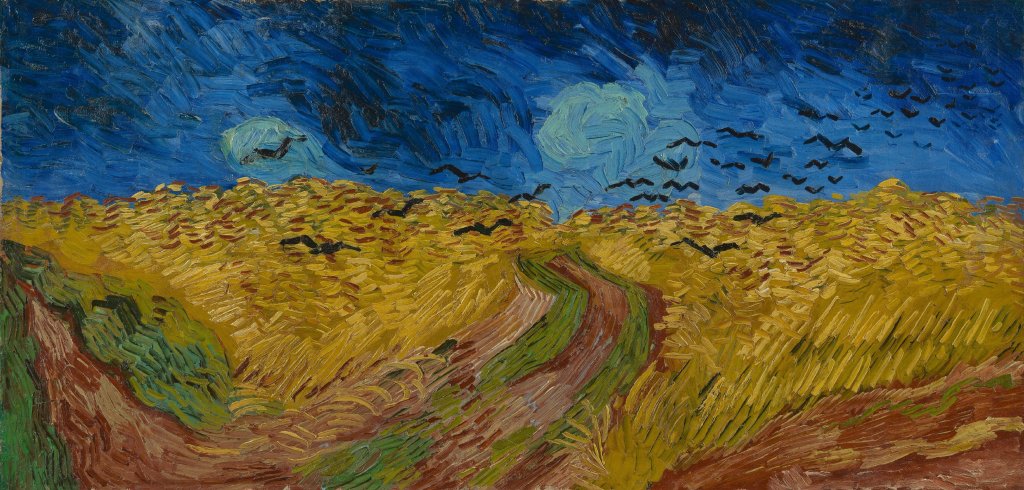
Wheatfield with Crows – Auvers-sur-Oise, July 1890
The sadness will last forever
In the early hours of July 29, with Theo sitting beside him, Van Gogh spoke the last words on record: “La tristesse durera toujours” — the sadness will last forever. Theo, in a letter to their sister recounting what had happened, described telling Vincent that they would do everything to cure him, hoping that kind of despair could still be overcome. It was to that hope that Vincent responded with those words. A few minutes later, he closed his eyes and never woke again.
He was 37 years old.
What Theo’s grief also reveals
There’s a part of this story that often goes unnoticed, but that may be the most moving of all: Theo never recovered. In the following months, his health — already fragile for years — collapsed. He was hospitalized in October 1890 and died on January 25, 1891, exactly six months after his brother, at age 33. The medical causes were different, but those close to him at the time had no doubt that grief accelerated everything.
It was Theo’s wife, Johanna van Gogh-Bonger — widowed after only a few months of marriage, with a newborn son — who gathered, organized, and finally published the two brothers’ letters. That act, decades later, would transform Van Gogh from an obscure, unsuccessful painter into the artist we know today. In a sense, Vincent’s posthumous fame was born from the love of two people he left behind.
What remains
Perhaps the most remarkable thing about Van Gogh’s letters isn’t the sadness itself — it’s how much clarity, tenderness, and capacity to love existed alongside it, right up to the end. He wasn’t only the pain he felt; he was also someone deeply attentive to the color of the afternoon light, to debts he felt guilty about accumulating, to the work of other painters he admired, to the well-being of the brother who supported him so much. The letters aren’t the record of a collapse — they’re the almost daily record of a man trying, with every tool he had, to stay standing.
References
• Bakker, Nienke; Jansen, Leo; Luijten, Hans. Vincent van Gogh: A Life in Letters. London: Thames & Hudson, 448 p. — edition prepared by researchers from the Van Gogh Museum, the same team responsible for the complete academic edition of the letters.
• Van Gogh Museum — Why Did Theo Die So Soon after Vincent?: vangoghmuseum.nl/en/art-and-stories/vincent-van-gogh-faq/why-did-theo-die-so-soon-after-vincent
• Van Gogh Museum — record for Wheatfield with Crows: vangoghmuseum.nl/en/collection/s0149v1962
• Van Gogh Letters (Van Gogh Museum) — letter RM25, the last letter to Theo, Auvers-sur-Oise, July 23, 1890: vangoghletters.org/vg/letters/RM25/letter.html
• The Art Newspaper — on Wheatfield with Crows and the book Van Gogh’s Finale, by Martin Bailey
• Goodreads / Vincent van Gogh’s Letters — excerpt on the creative process in a state of intense emotion (“if the emotions are sometimes so strong that one works without knowing one works”)
• National Gallery, London — release on the exhibition Van Gogh: Poets and Lovers (2024–2025), which brought together paintings and letter excerpts•Vincent van Gogh — The Letters: The Complete Illustrated and Annotated Edition. Thames & Hudson / Van Gogh Museum, 2009.
• Van Gogh Museum — vangoghletters.org (online edition of the complete letters).
• Naifeh, Steven; Smith, Gregory White. Van Gogh: The Life. Random House, 2011.
The translated excerpts of the letters in the body of the text are the original author’s own paraphrases from these sources — not literal quotations.
 Sunny Ink
Leave a comment