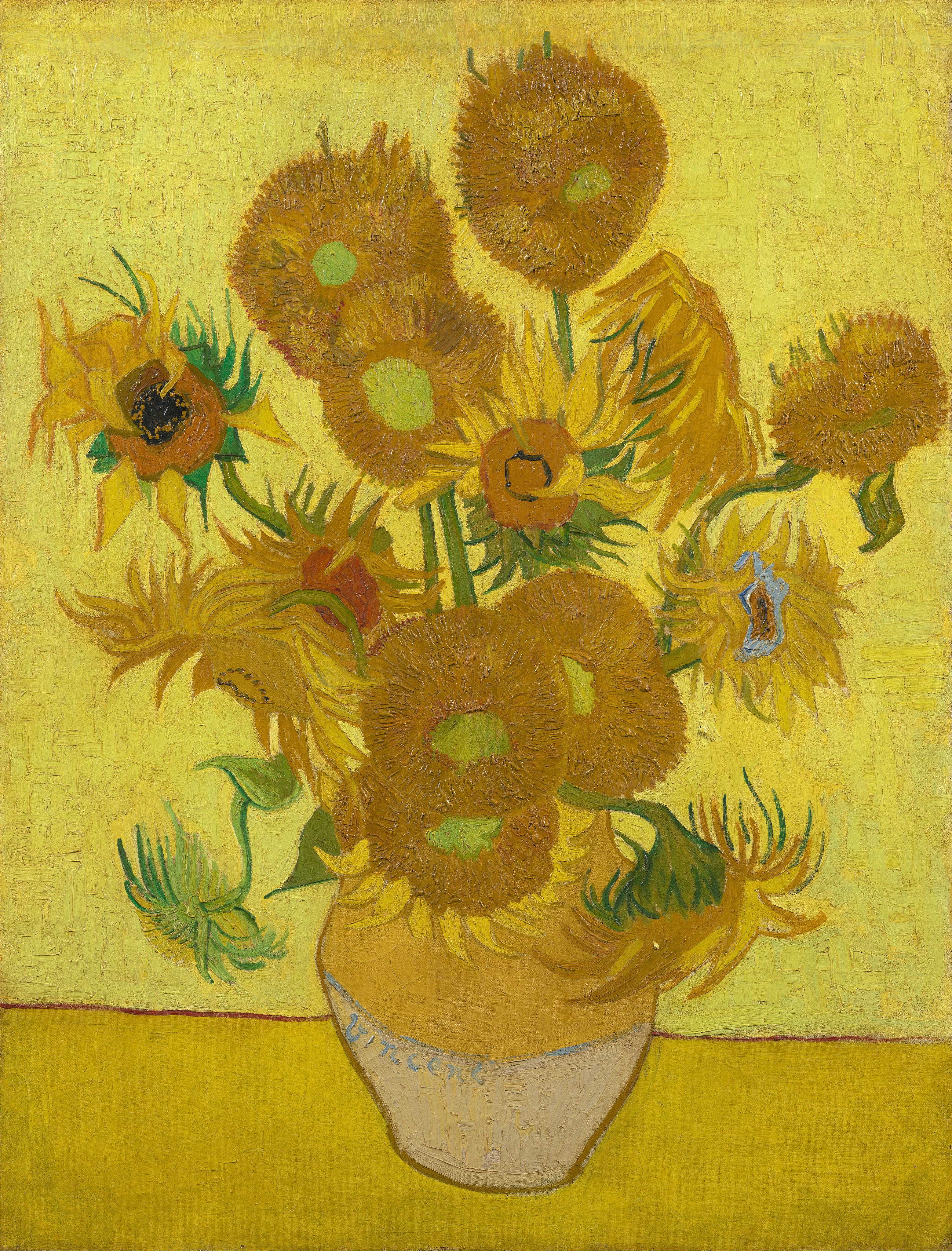
There is one image that the whole world carries when it thinks of Vincent van Gogh: a vase of sunflowers, thick with paint, burning gold against a wall of yellow. But what most people never learn is that this image isn’t one painting — it’s an obsession, painted again, and again, and again. And once you understand why he kept returning to that flower, you understand something much bigger about how he loved.
Not once. Eleven times.
Over the course of his short career, Van Gogh painted eleven works with sunflowers as the central subject, and they appear in still more as a supporting presence. The first wave came in Paris in 1887 — a series of cut sunflowers, lying loose across a tabletop, already wilting, already dying, and still he found them worth painting. But it was in Arles, in the south of France, between 1888 and 1889, that the obsession became legend: the sunflowers in a vase that now hang in museums from Amsterdam to Tokyo, printed on postcards, tattooed on skin, framed above beds.
He wasn’t just decorating a room
Here’s what breaks my heart a little about this story: Vincent painted those sunflowers to prepare for someone he loved. Paul Gauguin, the artist he had begged and pleaded with for months, had finally agreed to come stay with him in Arles. Vincent wanted to fill the house with nothing but large sunflowers, because he knew Gauguin adored them.
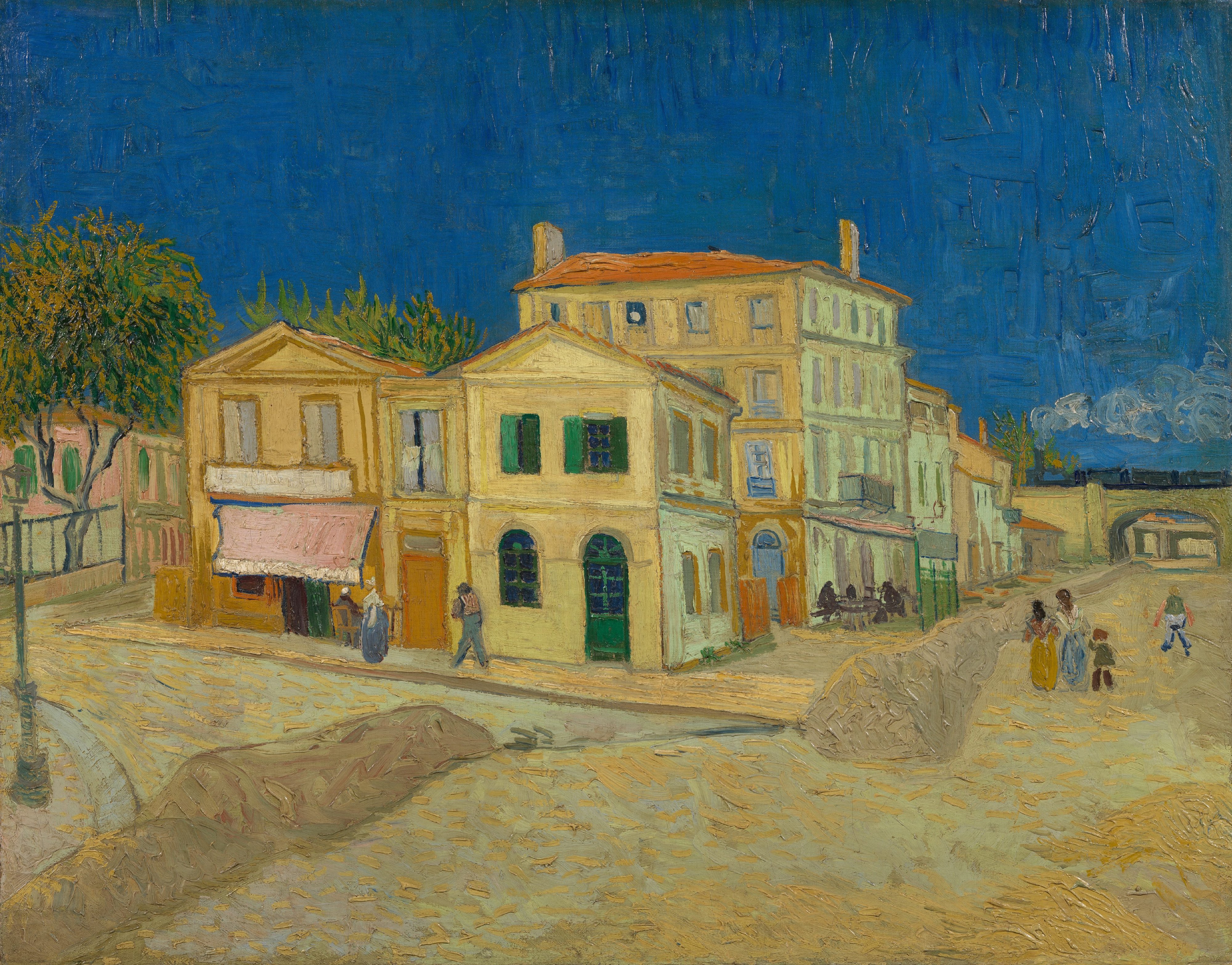
He didn’t stop at a modest gesture. He dreamed of a dozen canvases, a whole “symphony in blue and yellow,” painted purely to welcome a friend into his home. That is not decoration. That is devotion, translated into color because there was no other language wild enough to hold it.
He never finished the dozen. Illness and crisis interrupted him after seven. But even in the wreckage of that unfinished dream, something extraordinary survived.
Gratitude, painted over and over
In letters to his brother Theo, Vincent named exactly what those flowers meant to him. The yellow sunflowers were, to him, a symbol of loyalty and devotion — and above all, of gratitude. Read that again: a man crushed by rejection, living on the edge of poverty, battling his own mind — and the flower he chose to paint, over and over, was not one of despair. It was gratitude.
I find that almost unbearable in the best way. That someone so unseen could still choose to paint thankfulness, instead of bitterness, again and again, as if repetition itself was a form of prayer.
No two are the same
What moves me most is that not one of these paintings is a copy of the last. He shifted the palette, the number of blooms, the light. Every version was a new attempt to say something the previous one hadn’t quite reached. He wrote, almost tenderly, that the painting changes a little each time, growing richer the longer you look at it.
That’s not repetition for lack of imagination. That’s someone circling the same truth from every possible angle because it mattered too much to only say once.
Why it still matters today
The five best-known Arles sunflowers now live scattered across the world, drawing millions of visitors every year, each one standing quietly in front of a canvas that was once just a man’s way of saying thank you to a friend who almost never came. Sunflowers became so tied to his name that, when he died, friends carried sunflowers to his funeral — the flower had become him.
So the next time you sit down to color a sunflower in these pages, know this: you’re not just filling in yellow petals. You’re stepping into a conversation with a man who kept returning to the same simple flower — not because he ran out of ideas, but because he still had more gratitude left to give.
Maybe every canvas after the first was never really about improving on it — just a quiet, human refusal to believe something could already be whole.
References
- Van Gogh Museum — Why Did Van Gogh So Often Paint Sunflowers?, vangoghmuseum.nl
- Van Gogh Museum — What You Need to Know About Van Gogh’s Sunflowers, vangoghmuseum.nl
- Daily Art Magazine — Vincent van Gogh’s Iconic Sunflowers in 5 Facts
- My Modern Met — Exploring the History and Significance of Van Gogh’s Sunflower Paintings
- Artists Network — The Interesting Story of Van Gogh’s Famous Sunflowers
 Sunny Ink
Leave a comment